

Why Hurricane Season Matters Even This Far Inland
August through October is peak hurricane season, and while Tyler sits well inland, the effects of a Gulf Coast storm do not stop at the coastline. Remnant storm systems regularly push north and east through Texas, bringing high winds, heavy rain, and the kind of grid strain that leads to extended power outages far from where the storm actually made landfall.
That reality, combined with a Texas power grid that has faced well-publicized reliability challenges in recent years, is why more East Texas homeowners are looking seriously at whole-home generators. This guide covers what these systems actually do, how they differ from the portable generator sitting in your garage, and what to consider before installing one.
Tyler is roughly 200 miles from the Gulf Coast, which feels far enough to ignore hurricane season entirely. In practice, tropical systems that weaken after landfall still carry significant rainfall and wind well into East Texas, and the regional power infrastructure feels that impact even when the storm itself has been downgraded.
Add to that the broader pattern of grid strain during extreme heat, which August in Tyler reliably delivers, and you have two separate risk factors pointing at the same vulnerability: extended power loss during exactly the time of year you need cooling the most.
The Texas Grid Problem: More Than Just Storms
Storm-related outages are only part of the picture. Texas operates largely on an independent grid, and periods of extreme demand, whether from summer heat or winter cold, have led to conservation requests and, in some cases, rolling outages in recent years. For homeowners running medical equipment, home offices, well pumps, or simply trying to keep a house livable during a 100-degree week, an outage is not just an inconvenience. It is a real problem that can last hours or, in a severe storm scenario, days.
A generator is not about assuming the worst will happen every year. It is about not being caught without a plan when it does.
Whole-Home Generators vs. Portable Generators
Most homeowners already own or have considered a portable generator, and it is worth being clear about the difference before going further.
A portable generator requires manual setup during an outage. You have to retrieve it, fuel it, run extension cords to individual appliances, and manage it throughout the outage. It typically cannot power an entire home, including your AC system, at once. It also requires you to be present and available to manage it, which is not realistic during an overnight outage or if you are away when the power goes out.
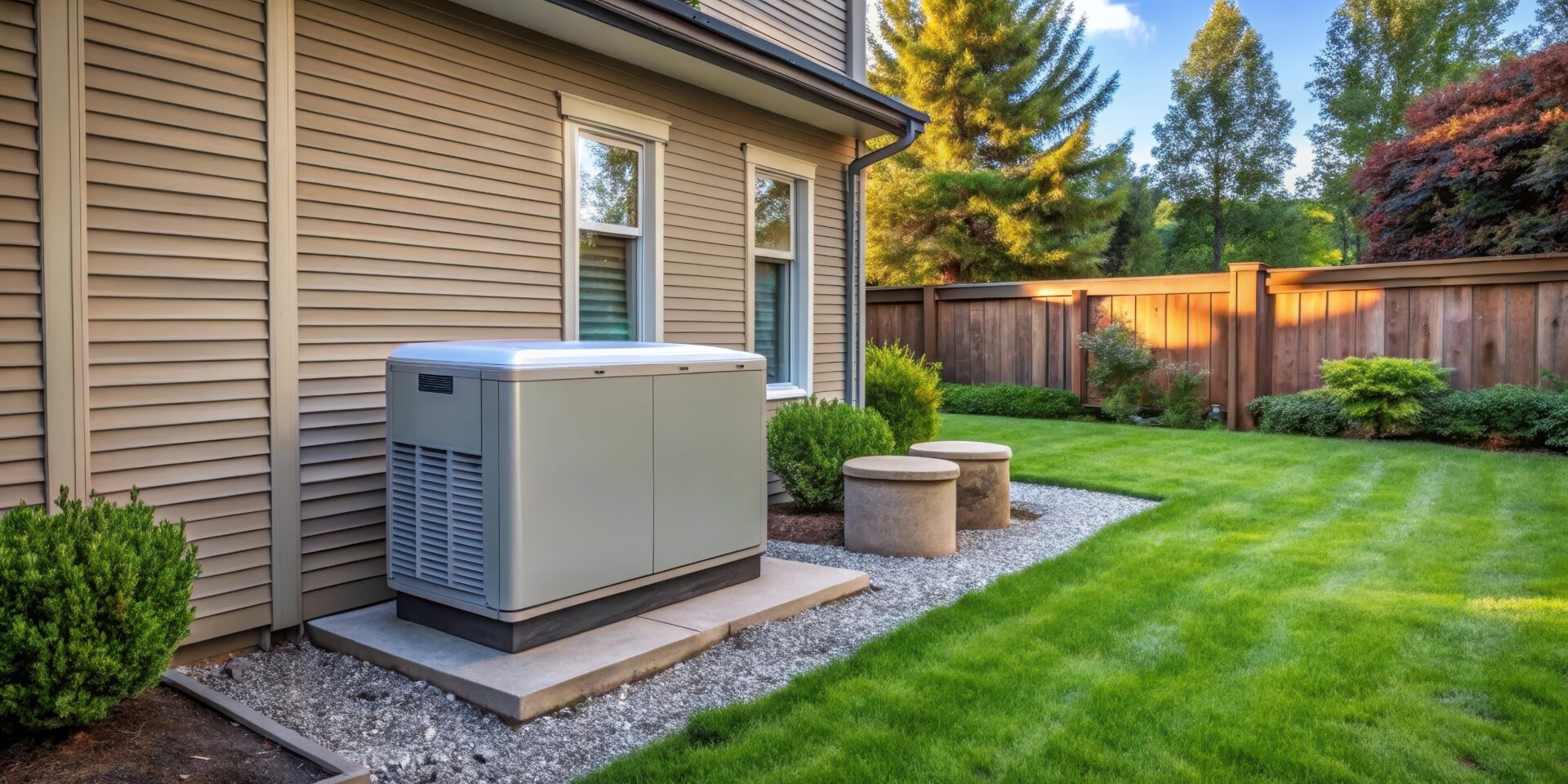
A whole-home generator is permanently installed outside your home, connected directly to your electrical panel, and starts automatically within seconds of a power loss. It can run your entire home, including your AC system, refrigerator, well pump, and everything else, without you doing anything at all. If you are not home when the power goes out, the system starts anyway.
Standby Generators: How They Actually Work
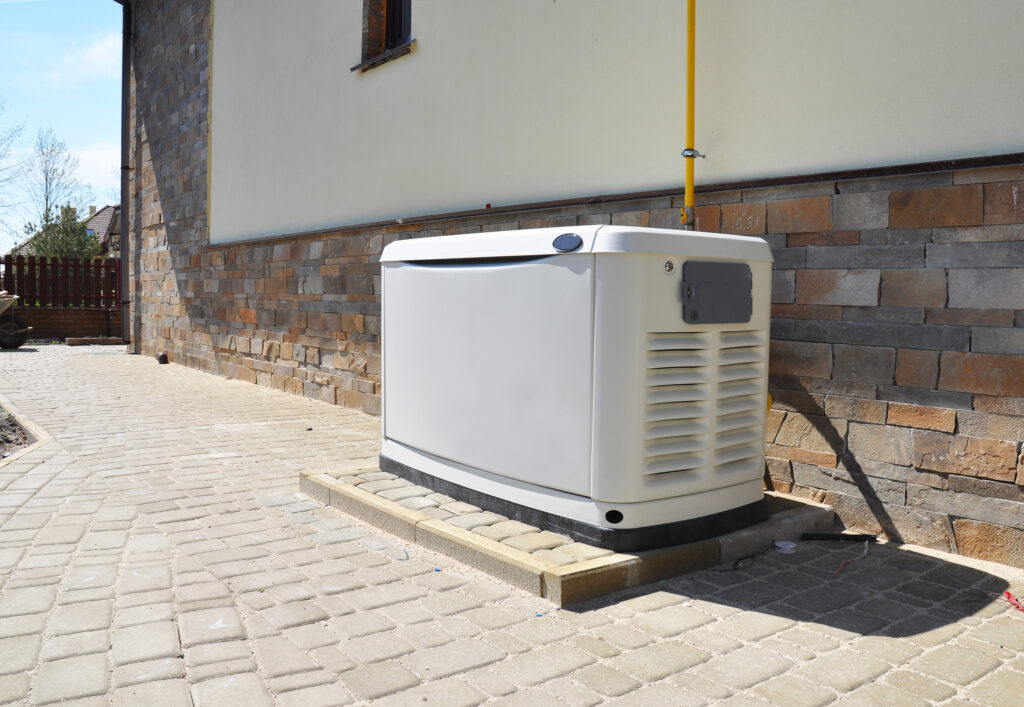
The terms “whole-home generator” and “standby generator” are often used interchangeably, and for good reason. A standby generator is the specific type of equipment used in a whole-home setup. It runs on natural gas or propane, sits on a concrete pad outside your home, and stays in standby mode continuously, monitoring your home’s power supply.
The moment utility power drops, a sensor detects the loss and the generator starts automatically, typically within 10 to 30 seconds. Power is restored to your home before your refrigerator has time to warm up or your AC has been off long enough to matter in the heat. When utility power returns, the system shuts itself off and returns to standby mode without any input from you.
The Role of a Transfer Switch
A standby generator cannot connect directly to your home’s electrical system safely on its own. That connection is managed by a transfer switch, which is the component responsible for disconnecting your home from the utility grid the moment an outage is detected and connecting it to the generator instead. This prevents backfeeding power into the grid, which is a serious safety hazard for utility workers attempting to restore service in your area.
A properly installed transfer switch is not optional equipment. It is a required part of any code-compliant whole-home generator installation, and it is one of the reasons this work needs to be handled by a licensed electrician rather than treated as a DIY project.
What a Whole-Home Generator Actually Protects
The honest answer depends on the size of the system installed, since generators are sized to match a home’s electrical load. A properly sized system can typically run:
- Your entire AC system, which matters enormously during an August outage
- Refrigeration and freezers, protecting the food already in your home
- Well pumps, for homes not on municipal water
- Lighting and essential outlets throughout the home
- Home office equipment, medical devices, and security systems
During the sizing conversation, a technician will walk through your home’s actual electrical demands rather than guessing, so the system installed matches what your household actually needs to keep running.
Cost, Financing, and the Surge Protection Bundle
Whole-home generator installation is a significant investment, and costs vary depending on the size of the unit and the scope of the electrical work involved. Rather than quote a number that will not apply evenly across different home sizes, the more useful starting point is a proper on-site evaluation, which accounts for your home’s specific electrical load and existing panel setup.
Evans Air Conditioning offers financing options to help spread that investment into a manageable monthly payment. Right now, homeowners who install a whole-home generator also receive free whole-home surge protection, a pairing that makes sense given how closely the two systems work together. A generator restores your power after an outage. Whole-home surge protection guards your electronics and appliances against the power surges that often occur when utility power is restored, or when your system transitions between grid and generator power.
Is a Generator Right for Your Home?
Not every home needs a whole-home generator, and an honest technician will tell you that. It tends to make the most sense for homeowners who:
- Have experienced extended outages in the past, whether from storms or grid strain
- Run a well pump and lose water access entirely during an outage
- Have a household member relying on medical equipment
- Work from home and cannot afford unplanned downtime
- Simply do not want to manage a portable generator during a stressful outage
If none of those apply, a smaller battery backup or surge protection alone may be a more appropriate starting point. Part of a proper consultation is figuring out which category your home falls into before recommending a system.
Getting Started
Evans Air Conditioning holds Texas Electrical License #592546 and has served Tyler, Longview, Lindale, and the surrounding East Texas area since 1978. A generator installation starts with an on-site evaluation of your home’s electrical panel and power needs, so you get a system sized correctly rather than oversold on capacity you do not need.
With hurricane season underway and peak summer heat still ahead, now is a practical time to have that conversation before an outage makes the decision for you.
Call 903-993-4779 to schedule a generator consultation, or use the form below to request an appointment and a member of the Evans team will confirm your visit.